Art meets Algorithm
By Kasturi Karle; 20th Nov 2025
As a designer, I chase new ways to create—but nothing has challenged me like AI.
Learning Google Flow for the first time felt like entering a new creative universe—one where imagination and technology constantly push against each other. I wasn’t unfamiliar with prompting; I had experimented with Midjourney during college. But this was an entirely different scale. This wasn’t about generating still images. This project was about creating moving narratives, building cinematic worlds, and holding on to emotional continuity across frames.
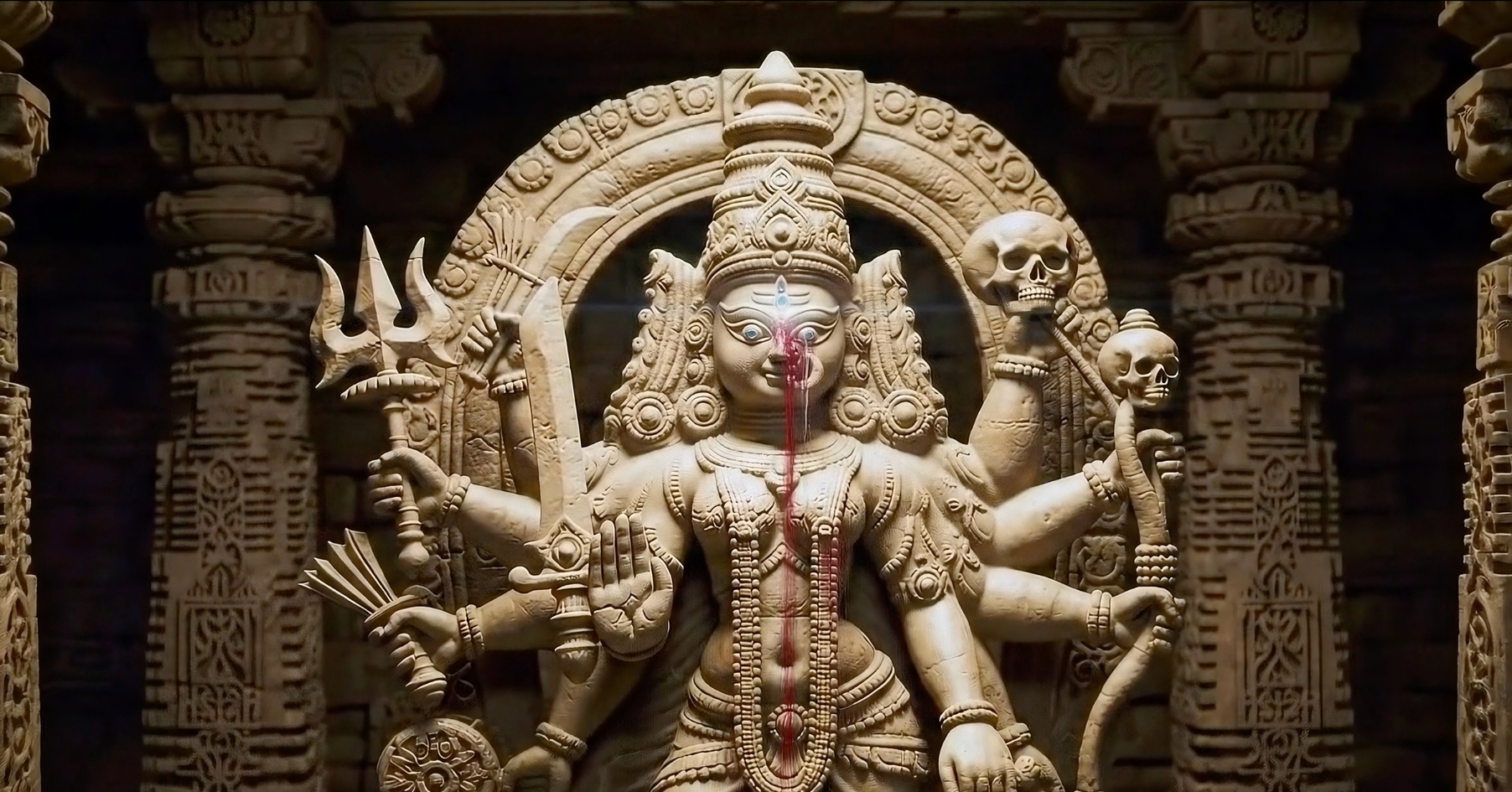
The brief was to recreate a major historical event of India—the story of the Kohinoor diamond. Until the early 1700s, the Deccan region was the world’s only known source of diamonds. The legendary Kohinoor is believed to have been mined from the Kollur Mine along the Krishna River, flourishing under the Kakatiya dynasty. For the performance, I created an immersive video sequence where an actor on stage had to meticulously interact with the video bridging the gap between the real and the unreal—to snatch the diamond from the eye of Goddess Bhadrakali, carved into the stone statue on screen. This merging of physical performance and digital storytelling meant every frame needed to feel alive, historically grounded. What the audience saw as a smooth 2-minute video took over two months to create.
Google Flow gives footage in 8-second clips, and stitching them into a single cinematic sequence was a challenge I did not expect. One clip would have the perfect lighting, the next would mysteriously change the mining worker’s face into something so distorted and hilarious. There were days I laughed more than I cried. Consistency became the heart of the process—keeping the same workers, the same earthy palette, the same riverbank, the same atmosphere. Each successful render felt like solving a historical puzzle. But through all the setbacks and small victories, I learned something that has reshaped how I approach creativity:
AI is powerful, but it is not the protagonist of our stories.
It’s a collaborator—a supporting character that steps in when imagination needs an extension, not when craft needs replacing. In theatre, we learn that every prop, movement, and cue supports the performance. AI plays a similar role. It amplifies, enhances, and expands what the human mind sets in motion.
This journey didn’t just teach me how to use Google Flow. It taught me how technology can honor art forms as old as theatre itself—and help us push them into new territories without losing their soul.